
Quy trình cắt kính tại cửa hàng: 6 bước chuẩn y khoa, kiểm định từng cặp
Toa kính đúng chưa đủ — kính phải được cắt đúng. 6 bước gia công tại Kính Mắt Điện Biên Phủ: chấm tâm số hoá EyeRuler, mài Briot Couture (Pháp), kiểm định cuối bằng NIDEK LM-1800PD theo dung sai ANSI Z80.1, kèm bảng thời gian lấy kính theo từng hãng tròng.

Cắt kính không phải một thao tác — là một dây chuyền kiểm soát
Từ toa kính đến cặp kính đeo trên mặt là 6 bước, mỗi bước có thiết bị riêng và chốt kiểm riêng. Đây là toàn bộ dây chuyền tại Kính Mắt Điện Biên Phủ: chấm tâm số hoá EyeRuler, máy mài Briot Couture của Pháp và cổng kiểm định NIDEK LM-1800PD của Nhật.
Dung sai theo ANSI Z80.1. Mốc 30 phút áp dụng cho tròng có sẵn kho tại cửa hàng — xem bảng thời gian theo hãng ở cuối bài.
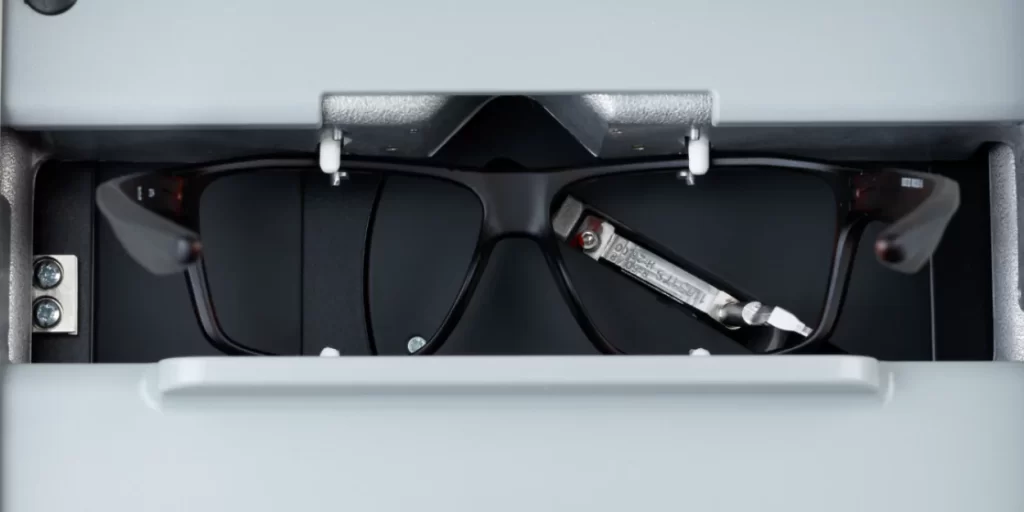
Mỗi bước một thiết bị, mỗi thiết bị một chốt kiểm
Kính lỗi hiếm khi sai ở một chỗ — nó sai ở bước không được kiểm. Vì vậy mỗi bước dưới đây kết thúc bằng một điều kiện phải đạt trước khi tròng được đi tiếp.
- 1Tiếp nhận toa & khám gọngChuyên viên khúc xạ
Đối chiếu SPH, CYL, AXIS, ADD, PD với nhu cầu nhìn thực tế: kính cho xa, cho gần hay đa tròng. Gọng được soi độ đối xứng, độ mở càng, ve mũi — gọng méo thì tròng đúng đến đâu kính vẫn lệch.
Chốt kiểm: toa hợp lệ; gọng đủ khoẻ và đủ chiều cao lắp cho loại tròng đã chọn.
- 2Chấm tâm số hoá trên gọng thậtEyeRuler — Pháp
Bạn đeo chính gọng đã chọn, đứng ở tư thế tự nhiên; thiết bị đo PD từng mắt, chiều cao đồng tử trên khung tròng, góc nghiêng gọng và khoảng cách đỉnh giác mạc — những con số mà thước tay dễ lệch 1–2 mm, đủ làm hỏng một cặp đa tròng.
Chốt kiểm: có PD monocular và chiều cao lắp cho TỪNG mắt — không dùng số trung bình hai mắt.
- 3Quét gọng 3DBriot Couture · TrueScan™
Đầu dò góc chuyên dụng lần theo rãnh viền của cả gọng kim loại mảnh nhất lẫn gọng thể thao cong cao, dựng mô hình 3D toàn bộ gọng — độ dày, hình dạng, vị trí rãnh cài. Demo lens bị vỡ? Shape Creator 2.0 tái tạo lại hình chuẩn.
Chốt kiểm: mô hình 3D khớp gọng thật; đường cong cơ sở của gọng đã được ghi nhận.
- 4Định tâm bằng bản đồ công suấtBriot Couture · Wavefront
Hệ quang học Visionix® đo công suất trên toàn bề mặt tròng (Power Map) và đọc dấu ẩn của tròng đa tròng mà không cần chấm bút. Thiết kế tròng được chiếu lên hình gọng ngay trước khi cắt — thấy trước hành lang nhìn gần nằm ở đâu.
Chốt kiểm: mô phỏng 3D xác nhận vùng quang học trùng tâm đã chấm ở bước 2 — chưa đạt thì chưa cắt.
- 5Mài định hìnhBriot Couture · TrueFit™
Máy tự nhận gọng kim loại hay nhựa, đo bề rộng rãnh để chọn kiểu vát và vị trí vát tối ưu; cảm biến giữ lực kẹp ổn định nên tròng phủ kỵ nước siêu trơn không trượt tâm; bánh mài kim cương 90 mm hoàn thiện cạnh cho cả gọng cong cao, gọng khoan, gọng gỗ.
Chốt kiểm: cạnh vát ngồi khít rãnh, không ứng suất; soi nứt mẻ trước khi lắp.
- 6Kiểm định cuối trên kính đã lắpNIDEK LM-1800PD — Nhật
Kính hoàn thiện được đo lại từng mắt: cầu, trụ, trục, ADD, lăng kính và tâm quang — đối chiếu toa gốc theo dung sai ANSI Z80.1 / ISO 21987. Số đo được đọc cho bạn nghe trước khi giao.
Chốt kiểm: mọi thông số nằm trong dung sai — lệch là mài lại hoặc thay tròng, không giao.
Sáu bước này áp dụng cho mọi đơn — kể cả tròng 180.000đ. Khác biệt giữa các đơn chỉ là thời gian chờ tròng về, không phải mức độ kiểm tra.
Vì sao chấm tâm đáng để làm cầu kỳ
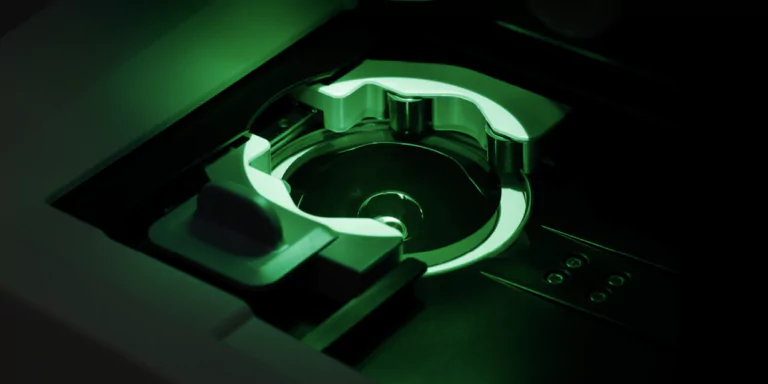
Briot Couture — máy mài của những gọng khó
Sản xuất tại Pháp. Những tính năng dưới đây không phải để trưng — mỗi cái mở khoá một loại gọng hoặc một loại tròng mà máy mài phổ thông phải từ chối.
Thấy kết quả cắt trên màn hình trước khi lưỡi mài chạm tròng. Chỉnh đến khi ưng — không thử-sai trên chính phôi tròng của bạn.
Đầu dò góc được cấp bằng sáng chế, quét nhẹ nhàng cả viền gọng kim loại mỏng manh lẫn gọng cong cao mà không làm biến dạng gọng.
Chiếu thiết kế tròng đa tròng lên hình dấu gọng trước khi cắt — xác nhận hình gọng và thiết kế tròng tương thích, không mất tiền và thời gian làm lại.
Bản đồ công suất trên toàn bề mặt tròng; định tâm tròng đa tròng theo dấu ẩn bằng hệ ảnh không thị sai — không cần chấm bút lên tròng đắt tiền.
Tính độ cong của cả tròng lẫn gọng để tối ưu vị trí vát: tròng tự vào đúng chỗ, không phải ép — an toàn cho cả gọng gỗ mỏng manh.
Tự phát hiện gọng kim loại hay nhựa, đo bề rộng rãnh dây viền và chọn kiểu vát nhỏ phù hợp — vị trí vát lý tưởng được đề xuất tự động.
Phay được hình phức tạp và góc vát thật cho gọng thể thao bao quanh có đường cong cơ sở cao — loại gọng mà nhiều máy mài phải trả lời "không nhận".
Lực kẹp lên tròng được giữ ổn định liên tục — tròng phủ kỵ nước siêu trơn không xoay lệch trục loạn. Thông số định tâm của gọng được ghi nhớ cho lần thay tròng sau.
Nguồn: tài liệu kỹ thuật Briot Couture (Visionix). Video máy vận hành thật có trong bài giới thiệu thiết bị — link ở cuối bài.
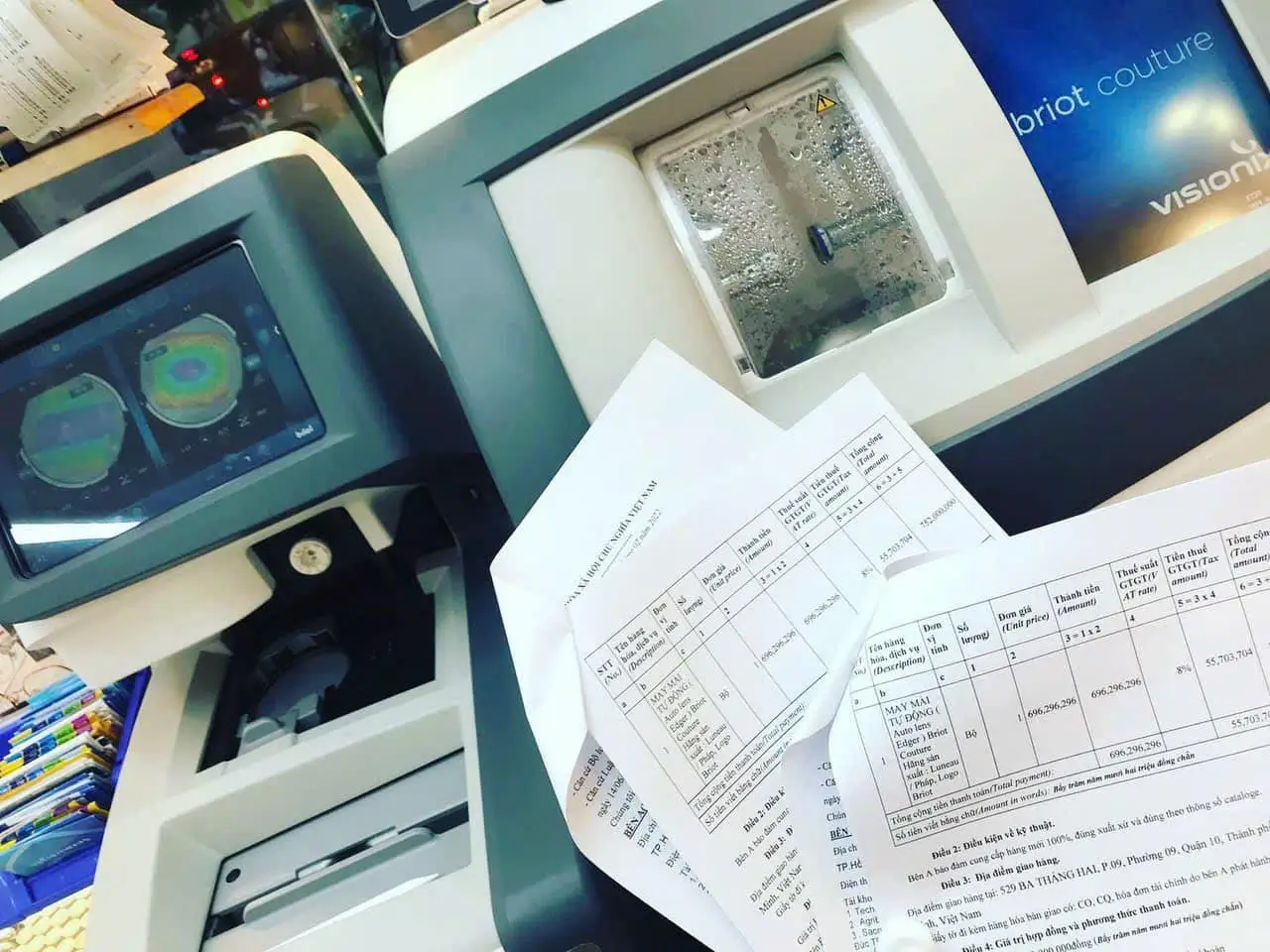
NIDEK LM-1800PD — con số quyết định kính có được giao
Máy đo tròng tự động của NIDEK (Nhật Bản). Mọi cặp kính hoàn thiện phải qua máy này trước khi đến tay bạn — cảm quan không thay được phép đo.
Bạn có quyền yêu cầu xem số đo này trước khi trả tiền. Tại Kính Mắt Điện Biên Phủ, kỹ thuật viên đọc số đối chiếu toa cho khách như một bước mặc định — không cần hỏi.
Nguồn sáng xanh lục 546 nm — đúng bước sóng chuẩn vạch e mà ISO dùng để định nghĩa quang độ tròng, nên số đo khớp trực tiếp công bố của nhà sản xuất. Dung sai đối chiếu: ANSI Z80.1; ISO 21987:2017.
"Trong dung sai" nghĩa là bao nhiêu?
Kính cắt đúng hay sai là chuyện đo được
ANSI Z80.1 quy định sai số tối đa giữa toa kê và tròng giao. ISO 21987 áp cho cặp tròng đã lắp vào gọng.
- Đến ±6.50 D
- ±0.13 D
- Trên ±6.50 D
- ±2%
- Đến 2.00 D
- ±0.13 D
- Trên 2.00 – 4.50 D
- ±0.15 D
- Trên 4.50 D
- ±4%
- Trụ 0.25 D
- ±14°
- Trên 0.25 – 0.50 D
- ±7°
- Trên 0.50 – 0.75 D
- ±5°
- Trên 0.75 – 1.50 D
- ±3°
- Trên 1.50 D
- ±2°
- Đến 4.00 D
- ±0.12 D
- Trên 4.00 D
- ±0.18 D
Trước khi nhận kính, hãy yêu cầu cửa hàng đo lại tròng đã lắp bằng lensmeter và đọc số cho bạn nghe. Đây là quyền của khách, không phải yêu cầu khó.
Nguồn: ANSI Z80.1 — dung sai tròng kính thuốc (các mức trên giữ nguyên qua bản 2010, 2015, 2020); ISO 21987:2017 — tròng đã lắp gọng.
Bao lâu lấy được kính? Tra đúng hãng tròng của bạn
Thời gian tính từ lúc chốt đơn. Tròng có sẵn kho (Stock) mài lấy trong ngày; tròng RX được hãng đúc riêng theo toa của bạn nên cần chờ sản xuất và vận chuyển.
Đơn chốt ngoài khung giờ nhận đơn được tính sang khung giờ kế tiếp. Thời gian RX là ngày làm việc, chưa gồm ngày lễ. Cần gấp cứ nói — thường có phương án tròng Stock tương đương để đeo trước.
Ba câu khách hỏi nhiều nhất
Để lại bình luận
Lưu ý: Bình luận của bạn sẽ được kiểm duyệt trước khi hiển thị. Vui lòng giữ nội dung lịch sự và phù hợp.