
Quy trình đo mắt 20 bước trên NIDEK RT-6100 — vì sao mất 20–30 phút
Vì sao đo mắt kỹ mất 20–30 phút thay vì 2 phút bắn máy? Giải mã quy trình đo chuẩn 20 bước trên phoropter NIDEK RT-6100: từng bước làm gì, tồn tại vì sao.

Tóm tắt cho người vội
Đo máy 2 phút và đo 20 bước khác nhau chỗ nào?
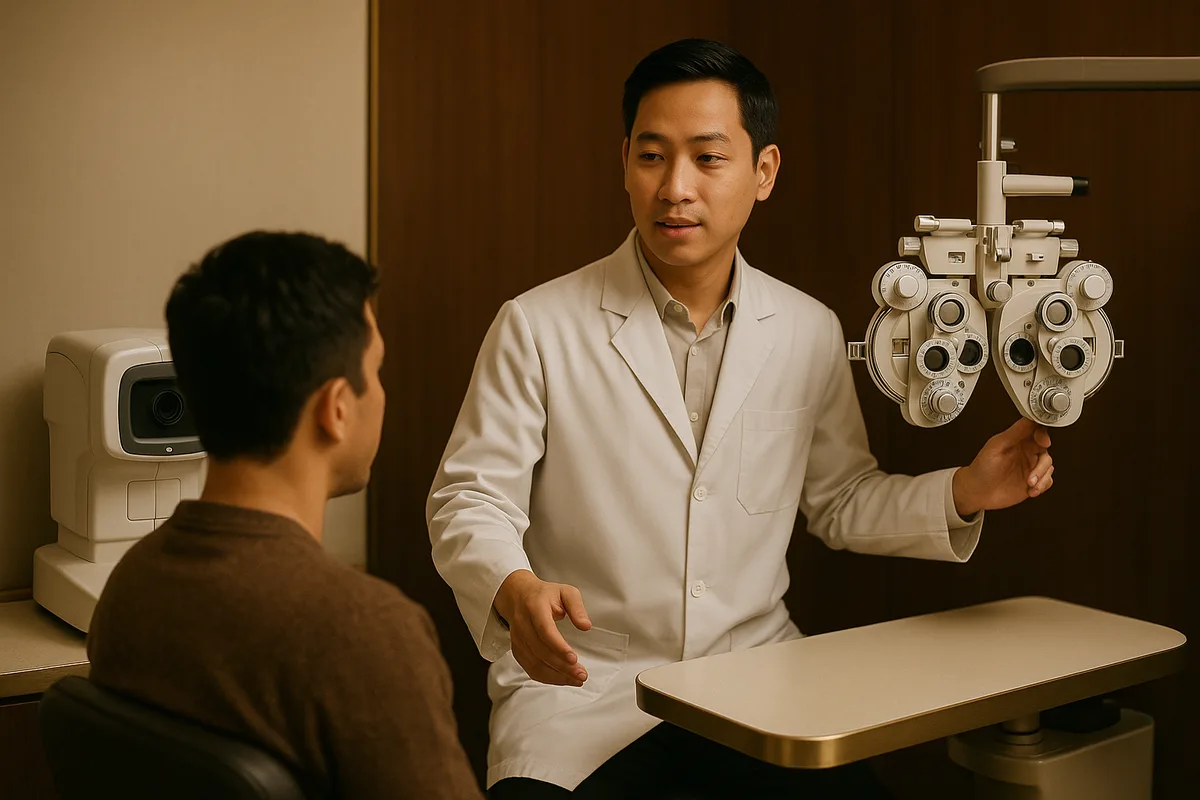
Chặng 1 (bước 1–3): nhập dữ liệu — biết mình bắt đầu từ đâu
- Nhập số đo máy tự động (AR) — bản nháp khách quan nói ở trên, truyền thẳng vào phoropter qua mạng nội bộ, không chép tay nên không tam sao thất bản.
- Đo thị lực không kính từng mắt và hai mắt — mốc "chưa chỉnh gì".
- Đo kính cũ trên máy đo tròng rồi thử thị lực với chính kính cũ — mốc "bạn đang quen với cái gì". Đây là dữ liệu quyết định ở chặng 3, vì vậy mang kính cũ đi đo quan trọng đến thế.
Chặng 2 (bước 4–15): tinh chỉnh từng mắt — trái tim của buổi đo
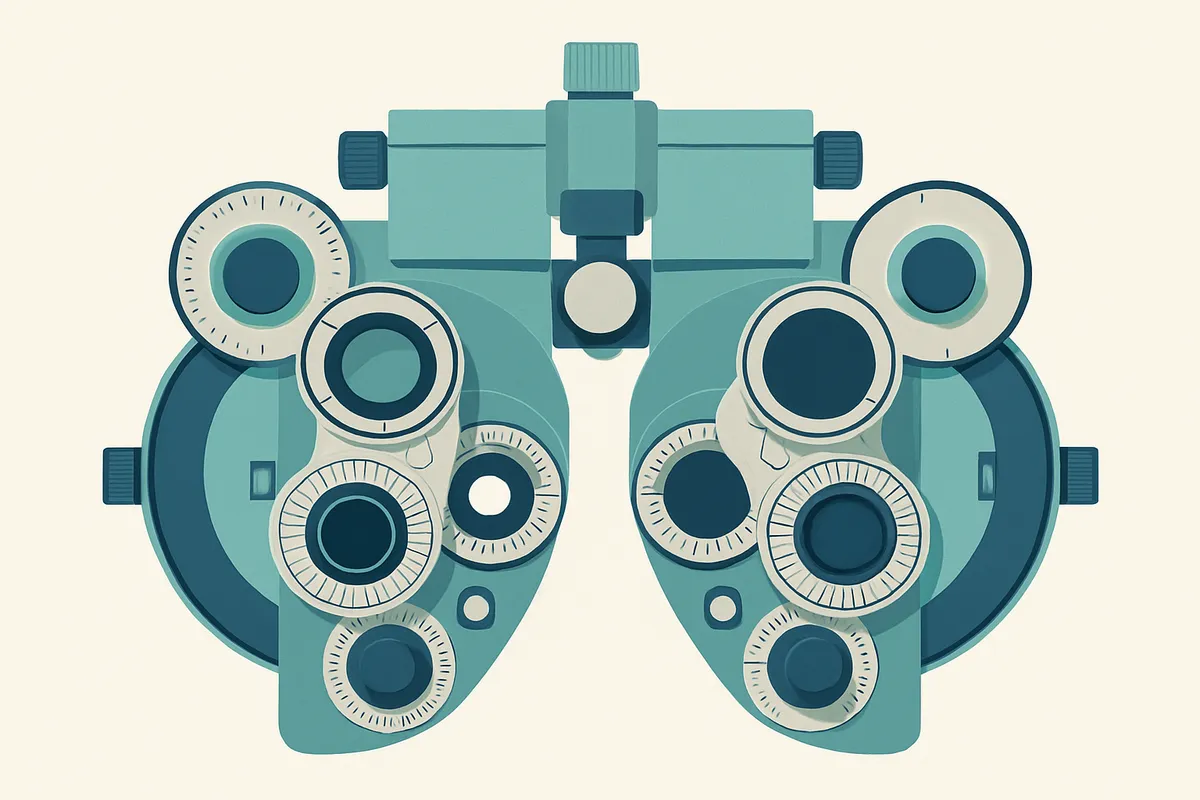
Mỗi mắt lần lượt đi qua 6 bước giống nhau (che mắt còn lại):
- Kiểm tra đầu vào: với số máy đưa ra, mắt phải đọc được cỡ chữ trung bình — nếu không, dữ liệu nháp có vấn đề và phải xử lý trước khi đi tiếp.
- Test đỏ – xanh lá lần 1: máy cộng thêm +0.50D làm mờ nhẹ (sương mù hóa) để thả lỏng điều tiết, rồi hạ dần và hỏi bạn chữ bên nền đỏ hay nền xanh lá rõ hơn — nguyên lý tán sắc của ánh sáng giúp phát hiện số đo đang non hay già độ. Chi tiết tại: cắt kính bị già độ và bài test đỏ – xanh lá.
- Chỉnh trục loạn bằng kính trụ chéo: chuỗi câu hỏi "rõ hơn 1 hay 2?" nổi tiếng — máy xoay trục từng nấc nhỏ tới 1° khi độ loạn cao. Vì sao phải chỉnh trục trước, độ sau: xem bí mật của kính trụ chéo.
- Chỉnh độ loạn cũng bằng kính trụ chéo, sau khi trục đã đúng.
- Test đỏ – xanh lá lần 2: thay đổi độ loạn làm dịch điểm hội tụ, nên phải kiểm tra lại độ cầu — vòng lặp cầu → loạn → cầu này chính là thứ khiến buổi đo lâu.
- Chốt thị lực tối đa với mức "cộng nhiều nhất có thể": nguyên tắc kinh điển — chọn mức cộng nhiều nhất (bớt trừ nhiều nhất) mà thị lực vẫn tối đa; với người cận, điều đó nghĩa là số kính thấp nhất có thể, không phải cứ tăng số là tốt.
Chặng 3 (bước 16–18): hai mắt cùng lúc — nơi các buổi đo nhanh bỏ qua
- Cân bằng hai mắt: kính phân cực tách hình thành hai hàng chữ, mỗi mắt thấy một hàng; máy làm mờ nhẹ cả hai rồi chỉnh đến khi hai hàng rõ ngang nhau. Từng mắt đúng chưa đủ — hai mắt lệch nhau một chút là đủ nhức đầu cả ngày, như đã phân tích trong bài đeo kính đúng độ vẫn nhức mắt.
- Kiểm tra nhìn nổi (stereo): bốn vạch có ký hiệu, bạn cho biết vạch nào "nổi" gần hơn — xác nhận hai mắt đang thật sự phối hợp thành một hệ, không mắt nào bị não "bỏ rơi".
- Quyết định độ đeo: bước biến "độ tối đa" thành "đơn kính". Máy có thuật toán riêng (NIDEK gọi là FinalFit) đối chiếu kết quả với kính cũ và khả năng thích nghi — với mắt cận, nếu không thật sự cần, mức tăng so với kính cũ và mức chênh hai mắt đều được giữ trong khoảng ~0.75D — rồi kỹ thuật viên hỏi cảm nhận của bạn để cộng trừ nấc cuối. Đây là lý do "đo 3 nơi ra 3 số": khác nhau không phải ở máy, mà ở có làm bước này hay không.
Chặng 4 (bước 19–20): nhìn gần — cho người trên 40 hoặc làm việc gần nhiều
- Đo độ nhìn gần (ADD): máy gợi ý con số khởi điểm theo tuổi, rồi tinh chỉnh bằng bảng kẻ ô ở đúng khoảng cách làm việc của bạn (đọc sách, màn hình hay bàn may — mỗi nghề một cự ly). Vì sao không thể "cộng đại theo tuổi": xem đo kính lão: ADD không thể cộng theo tuổi.
- Kiểm tra lại bằng bảng đọc gần thật: bạn đọc chữ nhỏ ở cự ly thật trước khi chốt đơn.
Với ca phức tạp, kỹ thuật viên có thể làm thêm các phép đo ngoài chương trình chuẩn (điểm quy tụ gần, biên độ điều tiết...) — chúng không thuộc 20 bước mặc định, chỉ dùng khi triệu chứng gợi ý.
Sau 20 bước vẫn chưa xong: từ đơn đo đến kính thật
Chuẩn bị gì cho buổi đo 20 bước?
Đọc thêm về thiết bị
Câu hỏi thường gặp
H: Đo 20 bước mất bao lâu?
A: Thường 20–30 phút cho ca tiêu chuẩn, lâu hơn với loạn cao, hai mắt chênh nhiều hoặc lần đầu đo đa tròng. Đo máy 2 phút chỉ tương đương chặng 1 của quy trình.
H: Trả lời sai "1 hay 2" có làm kết quả sai không?
A: Không đáng lo. Máy hỏi lặp lại nhiều vòng với bước thử nhỏ dần chính là để khử nhiễu từ những câu trả lời phân vân; "hai cái như nhau" cũng là đáp án hợp lệ và thường là tín hiệu đã chỉnh đúng.
H: Vì sao nơi khác đo 5 phút cũng ra đơn kính?
A: Đơn 5 phút thường là số máy tự động cộng trừ kinh nghiệm. Với mắt dễ tính, kết quả có thể chấp nhận được; với mắt loạn, hai mắt chênh, người nhạy cảm hoặc trên 40 tuổi, thiếu các bước chủ quan là nguồn gốc của kính "đúng số mà khó chịu".
H: Trẻ em có đo được quy trình này không?
A: Ngồi sau phoropter và trả lời ổn định thường cần từ tuổi mẫu giáo lớn – tiểu học (khoảng 5–6 tuổi trở lên). Trẻ nhỏ hơn, trẻ tăng độ nhanh hoặc số đo dao động nên khám bác sĩ mắt với phương pháp khách quan phù hợp lứa tuổi, cân nhắc nhỏ thuốc liệt điều tiết trước khi đo.
H: Đơn đo dùng được bao lâu?
H: Đo có đau hay nhỏ thuốc gì không?
A: Không. Toàn bộ 20 bước là nhìn qua tròng thử và trả lời câu hỏi. Thuốc liệt điều tiết chỉ dùng khi bác sĩ chỉ định ở cơ sở y tế, không thuộc quy trình đo kính thông thường.
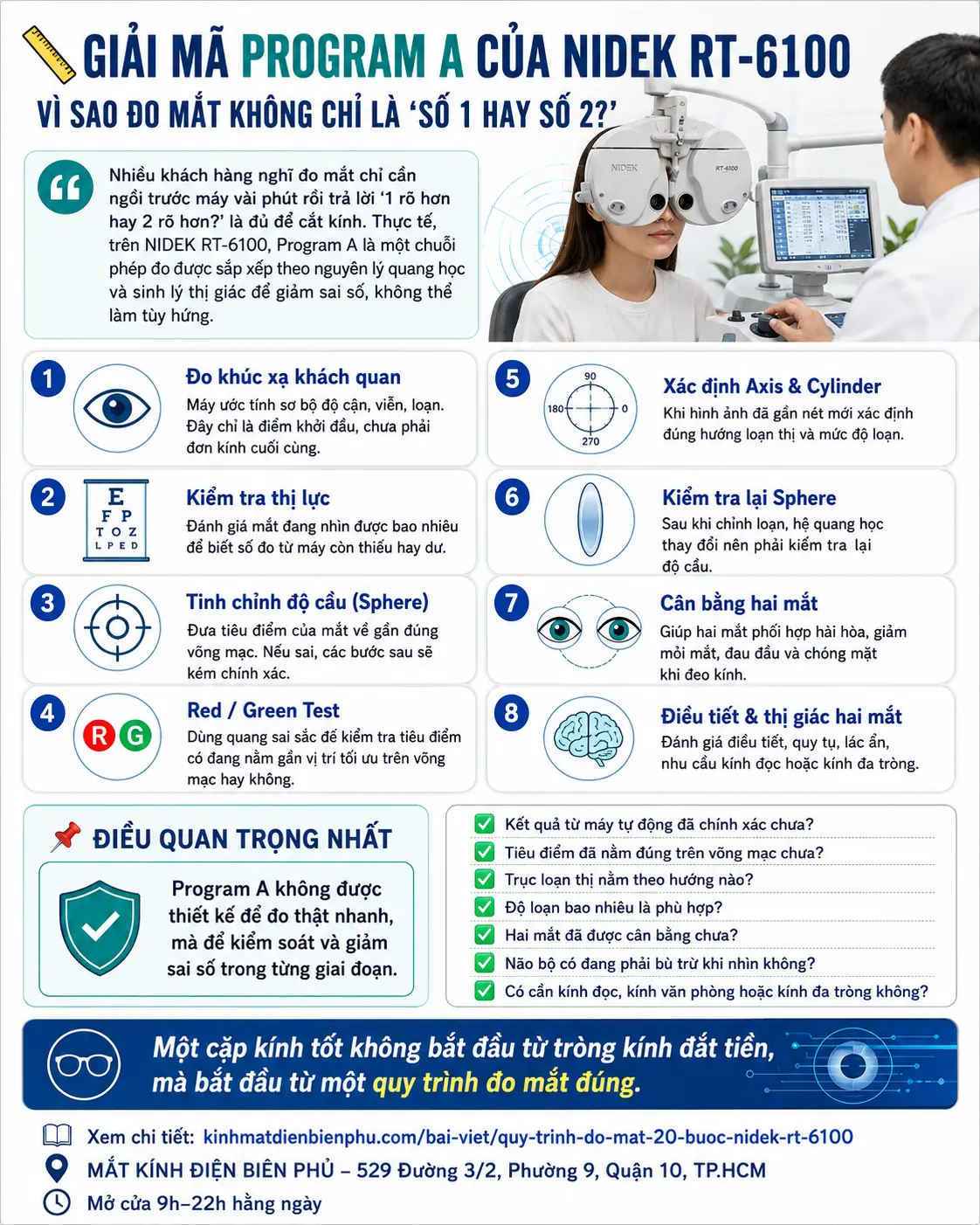
Tổng kết
Nguồn tham khảo
- NIDEK CO., LTD. — Operator's Manual Refractor RT-6100 (chương Programmed Refraction, Standard Program A; Power Adjustment/FinalFit) và trang sản phẩm Intelligent Refractor RT-6100.
- StatPearls / NCBI Bookshelf — Subjective Refraction Techniques.
Để lại bình luận
Lưu ý: Bình luận của bạn sẽ được kiểm duyệt trước khi hiển thị. Vui lòng giữ nội dung lịch sự và phù hợp.