Trong ba con số của đơn kính loạn (độ cầu – độ loạn – trục),
trục là con số bị xem nhẹ nhất và cũng
nhạy nhất: với độ loạn từ trung bình trở lên, chỉ cần lệch 5–10° là đủ để nền nhà trông "cong", chữ đổ bóng, quay đầu nhanh thấy chóng mặt — dù độ cầu và độ loạn đều đúng tuyệt đối. Bài này giải thích vì sao trục nhạy đến vậy, trục sai thường sinh ra từ khâu nào, và cách kiểm tra — phần tiếp nối của bài tổng quan
loạn thị là gì và
quy trình đo mắt 20 bước.
Mắt loạn nhìn thế giới như thế nào?

Mắt bình thường hội tụ ánh sáng về một điểm trên võng mạc. Mắt loạn có giác mạc cong không đều — kiểu mặt muỗng thay vì mặt cầu — nên hội tụ theo hai kinh tuyến mạnh yếu khác nhau: ánh sáng không về một điểm mà tạo thành hai đoạn tiêu vuông góc nhau, một trước một sau (quang học gọi vùng ánh sáng giữa hai đoạn đó là chùm Sturm). Não nhận được ảnh nét theo một phương, nhòe theo phương kia → chữ có "đuôi", đèn xa tóe tia, đường thẳng như đổ bóng.
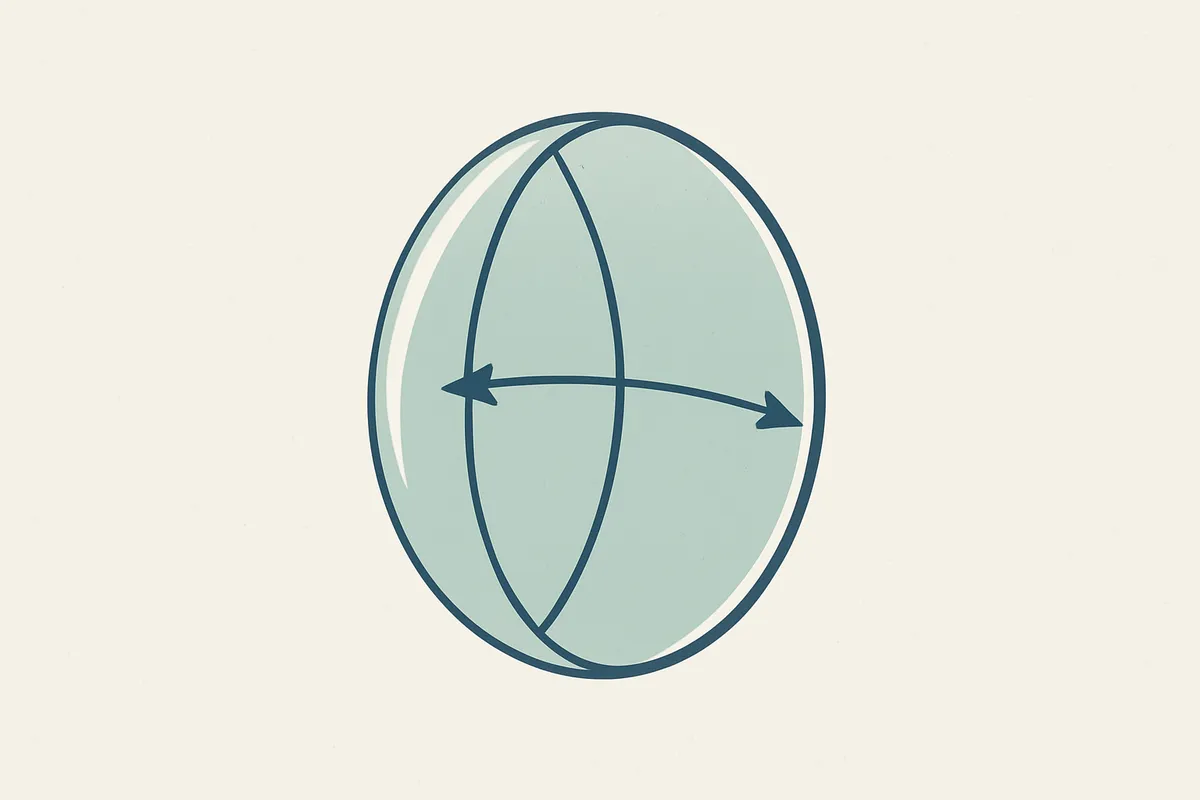
Tròng kính loạn sửa lỗi này bằng cách bù đúng lượng, đúng phương: nó ép hai đoạn tiêu chập lại thành một điểm. "Đúng phương" chính là trục — và đó là chỗ mọi rắc rối bắt đầu.
Vì sao lệch vài độ đã đủ gây chuyện?
Khi trục kính lệch khỏi trục mắt, phần bù không những không triệt tiêu hết loạn cũ mà còn sinh ra một lượng loạn mới xoay chéo. Quang học có công thức ước lượng gọn: loạn tồn dư ≈ 2 × độ loạn × sin(góc lệch). Áp cho mắt loạn 2.00D:
- Lệch 5° → tồn dư ~0.35D, kèm ảnh xoắn nhẹ — người nhạy bắt đầu thấy "gì đó sai sai".
- Lệch 10° → tồn dư ~0.7D — tương đương đeo thiếu một phần ba độ loạn, kèm méo hình rõ.
- Lệch 30° → tồn dư ~2.00D — bằng đúng độ loạn ban đầu: cặp kính coi như vô dụng về mặt chỉnh loạn, chỉ còn gây méo.
Quy luật rút ra: loạn càng cao, trục càng phải chính xác. Mắt loạn 0.50D lệch 10° gần như không ai nhận ra; mắt loạn 3.00D thì 3° đã là chuyện lớn. Đây cũng là lý do trên phoropter NIDEK RT-6100, bước xoay trục tự thu từ 5° xuống 1° khi độ loạn vượt ngưỡng.
Và vì loạn tồn dư nằm
chéo, triệu chứng của nó rất đặc trưng: không chỉ mờ, mà
méo có hướng — mặt bàn như nghiêng, khung cửa như đổ, bước xuống cầu thang hụt chân, quay đầu nhanh thấy quay cuồng. Nếu bạn đang gặp đúng cụm triệu chứng này với kính mới, hãy đối chiếu thêm
6 nguyên nhân kính đúng độ vẫn nhức mắt.
Trục sai sinh ra từ đâu? Hai khâu, không phải một
Khâu đo — kết luận trục quá vội: lấy nguyên số máy tự động (vốn chỉ là bản nháp), hoặc bỏ qua vòng tinh chỉnh chủ quan. Trục do máy đoán và trục não bạn "chịu" có thể khác nhau vài độ — vài độ đó chính là khoảng gây chóng mặt ở loạn cao.
Khâu lắp ráp — đơn đúng nhưng tròng xoay lệch trong gọng: tròng loạn phải được canh trục chính xác khi mài lắp; gọng biến dạng, ốc lỏng hay lắp ẩu đều làm trục thực tế trên kính khác trục trên đơn. Điểm hay bị bỏ sót: kính đeo lâu bị vặn gọng do va đập, ngồi đè cũng làm trục trôi dần — kính cũ từng êm bỗng thấy méo là có thật.
Tin tốt: khâu lắp kiểm tra được bằng máy trong một phút — máy đo tròng (lensmeter) đọc thẳng trục thực tế trên kính của bạn, đối chiếu với đơn là biết ngay lỗi nằm ở kính hay ở số đo.
Đo trục đúng cách: hai lớp lưới
Buổi đo chuẩn bắt trục bằng hai lớp:
- Bảng đồng hồ loạn thị — hình nan hoa tỏa tròn như mặt đồng hồ. Mắt loạn (sau khi được làm mờ nhẹ có kiểm soát) sẽ thấy một chùm nan đậm rõ hơn các nan khác; vị trí "giờ" của chùm nan đó cho ra trục sơ bộ chỉ trong vài giây.
- Kính trụ chéo — tinh chỉnh quanh trục sơ bộ bằng chuỗi câu hỏi "rõ hơn 1 hay 2?", khép vòng từng nấc 5° rồi 1°, chỉnh trục trước rồi mới đến độ loạn. Vì sao thứ tự đó bất di bất dịch: xem bí mật của kính trụ chéo.
Đổi về trục đúng rồi... vẫn thấy nghiêng?
Có một tình huống ngược đời: người đeo kính sai trục lâu năm, não đã âm thầm thích nghi với thế giới hơi méo đó. Khi được chỉnh về trục đúng, vài ngày đầu họ lại thấy sàn nhà nghiêng, hình "đổ" — không phải kính sai, mà là não đang gỡ lớp thích nghi cũ. Cảm giác này thường tự hết trong vài ngày đến một tuần, và đặc điểm nhận diện là giảm dần theo ngày. Với loạn cao hoặc người lớn tuổi nhạy cảm, kỹ thuật viên có kinh nghiệm đôi khi chọn lộ trình chuyển dần thay vì nhảy thẳng về trục lý tưởng — thêm một lý do khiến "độ đo được" và "độ đeo" là hai quyết định khác nhau.
💡Tự kiểm tại nhà trong 30 giây
Che từng mắt, nhìn khung cửa hoặc gạch lát nền qua kính: nếu một mắt thấy đường thẳng bị nghiêng hay đổ bóng mà mắt kia không bị (hoặc kính cũ không bị) → mang kính đi kiểm tra trục trên máy đo tròng trước, chưa vội đo lại mắt.
Khi nào không phải chuyện của kính gọng?
Nếu độ loạn tăng nhanh bất thường, số đo mỗi lần một khác nhiều, hoặc đã chỉnh trục chuẩn mà hình vẫn méo rõ — đặc biệt kèm mờ tăng dần — cần khám chuyên khoa mắt: một số bất thường giác mạc gây loạn không đều mà kính gọng thường không chỉnh hết được, và phát hiện sớm luôn có giá trị. Tương tự, chóng mặt xuất hiện cả khi không đeo kính, hoặc kèm buồn nôn, mất thăng bằng, nhìn đôi đột ngột — đó không còn là chuyện chỉnh trục: đi khám bác sĩ sớm. Đây là ranh giới giữa việc của tiệm kính và việc của bác sĩ.
Câu hỏi thường gặp
H: Loạn nhẹ 0.25–0.50D có cần chỉnh trên kính không?
A: Tùy triệu chứng. Nhiều người bỏ qua được; người hay lái xe đêm, làm việc màn hình nhiều hoặc nhạy cảm thì nên chỉnh — quyết định dựa trên thử thực tế lúc đo, không có đáp án chung.
H: Kính cũ đang êm tự nhiên thấy méo, có phải mắt tăng loạn?
A: Chưa chắc — khả năng cao hơn là gọng biến dạng làm trục xoay trôi. Kiểm tra kính trên máy đo tròng trước (một phút), rồi mới quyết định có đo lại mắt hay không.
H: Trục ghi 175° và 5° có khác nhau nhiều không?
A: Trông xa nhau nhưng thật ra chỉ cách nhau 10° — thang trục chạy 0–180° và hai đầu nối vòng với nhau. Ở loạn cao, 10° đó vẫn đủ gây tồn dư đáng kể, nên đừng coi hai đơn như một.
H: Vì sao đo máy ra trục khác đơn cũ mà đeo đơn cũ vẫn êm?
A: Máy tự động chỉ ước lượng; trục "êm" là trục đã qua tinh chỉnh chủ quan và não bạn đã quen. Chênh nhỏ giữa số máy và đơn đang đeo là bình thường — quan trọng là kết quả sau vòng kính trụ chéo.
H: Mới đổi kính đúng trục mà thấy nền nhà nghiêng, có phải cắt hỏng?
A: Thường là hiện tượng thích nghi khi não gỡ thói quen với trục sai cũ — tự hết trong vài ngày đến một tuần và phải giảm dần theo ngày. Nếu sau một tuần không thấy giảm, hoặc quá hai tuần vẫn khó chịu, mang kính đi kiểm tra trục lắp thực tế.
H: Loạn thị có mổ được không?
A: Có các phương pháp phẫu thuật khúc xạ xử lý được loạn thị đều, do bác sĩ chuyên khoa đánh giá và chỉ định — nằm ngoài phạm vi của tiệm kính. Xem tổng quan các lựa chọn trong bài
loạn thị.
Tổng kết
Trục là con số
nhạy nhất trên đơn kính loạn: sai vài độ ở loạn cao là đủ đổi trải nghiệm từ "êm" sang "say". Nó có thể sai ở khâu đo lẫn khâu lắp — và cả hai đều kiểm tra được: máy đo tròng soi kính trong một phút, bảng đồng hồ loạn cộng kính trụ chéo khép vòng quanh trục thật của mắt. Kính của bạn đang cho cảm giác méo, nghiêng?
Đặt lịch kiểm tra — mang theo kính đang đeo; tiếp tục
lựa tròng ·
bài viết.
Nguồn tham khảo
- StatPearls / NCBI Bookshelf — Subjective Refraction Techniques (tinh chỉnh trục trước, độ sau).
- Del Priore LV, Guyton DL. The Jackson cross cylinder: a reappraisal. Ophthalmology. 1986;93(11):1461-5.
- NIDEK CO., LTD. — Operator's Manual Refractor RT-6100 (mục Cylinder Test, Astigmatism clock dial, AXIS auto step).

