Sau
buổi đo 20 bước, bạn cầm trong tay một đơn kính chuẩn. Tin không vui: đơn chuẩn mới đi được
nửa đường. Nửa còn lại nằm ở khâu ít ai để ý —
chuyển thông số từ phoropter sang gọng kính thật: tâm tròng đặt ở đâu, kính ngồi cách mắt bao xa, nghiêng bao nhiêu độ. Cùng một đơn, khâu này làm chuẩn thì kính êm, làm ẩu thì thành cặp kính "đúng số mà đeo không nổi". Bài này điểm mặt bốn thông số quyết định:
PD,
vertex,
chiều cao tâm lắp và
tư thế gọng.
PD: không phải một con số, mà là ba

Ai cũng biết PD là khoảng cách hai đồng tử — nhưng ít ai biết trên một đơn kính tử tế, nó không phải một con số duy nhất:
- PD nhìn xa và PD nhìn gần khác nhau: khi đọc sách, hai mắt xoay vào trong, PD hẹp lại vài milimet. Phoropter RT-6100 tính sẵn PD gần theo cự ly làm việc và in cả hai lên phiếu — kính đọc lắp theo PD xa là lắp lệch có hệ thống.
- PD từng mắt (monocular PD): mặt người không đối xứng — sống mũi hiếm khi nằm chính giữa hai đồng tử. Người có PD từng mắt lệch nhau kiểu 33/29mm mà lắp theo PD tổng 62 chia đôi thì cả hai tâm đều sai 2mm. Với độ cao, đó là nguồn hiệu ứng lăng kính ngoài ý muốn gây nhức đầu.
Tâm tròng lệch khỏi đồng tử milimet nào là mắt phải "gồng" bù milimet đó, và độ càng cao cái giá càng đắt. Tìm hiểu sâu hơn về chính con số này:
PD là gì và cách đo chuẩn ·
tự đo PD tại nhà chính xác đến đâu.
Vertex distance: kính ngồi cách mắt bao xa
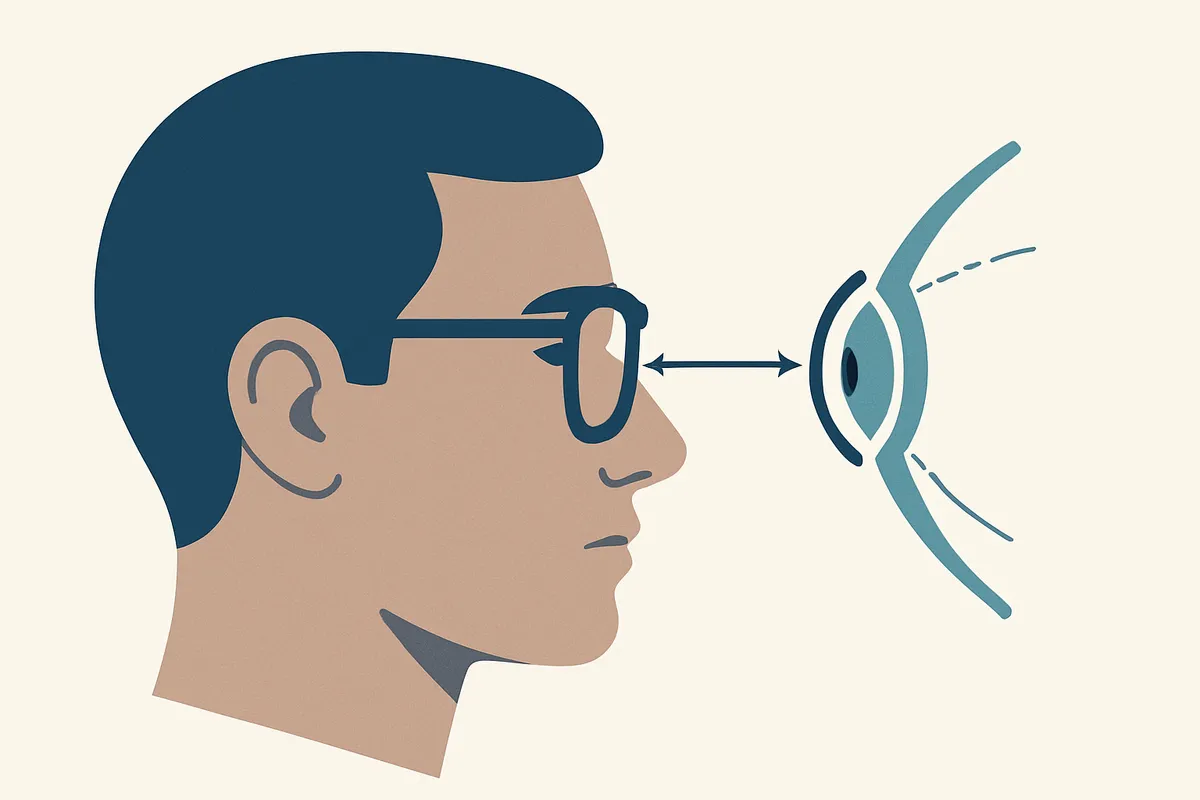
Mọi con số trên đơn được đo ở một khoảng cách kính–mắt xác định: trên phoropter, tròng thử nằm cách đỉnh giác mạc ~12mm, và máy có hẳn cửa sổ ngắm với thang chia 12 / 13.75 / 16 / 18 / 20mm để kỹ thuật viên canh đúng vị trí này trước khi đo. Con số ấy gọi là vertex distance — và nó là một phần ẩn của đơn kính.
Kính thật ngồi xa hơn hay gần hơn vị trí đo là hiệu lực của độ thay đổi: kính cận ngồi xa mắt hơn thì "yếu" đi, ngồi sát hơn thì "mạnh" lên (kính viễn ngược lại). Dưới ±4.00D, chênh lệch này nhỏ tới mức bỏ qua được; từ ±4.00D trở lên thì phải tính — gọng trượt xuống mũi vài milimet đủ biến đơn đúng thành kính sai. Đó là lý do người độ cao đổi từ gọng ôm sát sang gọng ngồi xa thường thấy "kính mới yếu hơn" dù cùng một đơn.
Chiều cao tâm lắp và độ nghiêng gọng
PD giải quyết chiều
ngang; còn chiều
dọc là
chiều cao tâm lắp (fitting height) — tâm quang học phải nằm đúng cao độ so với đồng tử
trên chính gọng bạn chọn, khi bạn đang đeo nó với tư thế tự nhiên. Với tròng đơn, sai số dọc gây mỏi tương tự sai PD. Với
đa tròng thì khắc nghiệt hơn hẳn: hành lang chuyển độ chỉ rộng vài milimet — tâm lắp cao thấp sai 2–3mm là vùng nhìn gần "rơi" sai chỗ, đọc phải ngửa cổ hoặc không tìm thấy nét.
Kèm theo đó là
tư thế gọng: độ nghiêng mặt tròng về phía má (pantoscopic tilt), độ cong ôm mặt của gọng — chúng thay đổi góc ánh sáng đi qua tròng, và tròng đa tròng, tròng độ cao đều nhạy với chúng. Vì vậy
quy trình cắt kính chuẩn bắt buộc
chấm tâm trên gọng thật lúc khách đang đeo — cửa hàng dùng thiết bị chấm tâm chuyên dụng cho việc này (
Eyeruler) — chứ không lắp theo thông số mặc định của xưởng.
Gọng không chỉ là thời trang — nó là một thông số quang học
Từ những điều trên, một hệ quả ít người ngờ: chọn gọng là một quyết định quang học. Gọng quá rộng so với mặt đẩy tâm tròng ra xa đồng tử (tròng vừa dày vừa dễ lệch tâm); gọng ôm cong kiểu thể thao làm thay đổi góc nhìn qua tròng; gọng không có đệm mũi chỉnh được thì vertex "trôi" theo từng lần trượt. Người độ cao hoặc đeo đa tròng nên chọn gọng cùng với người sẽ lắp kính — đẹp và đúng hoàn toàn có thể đi cùng nhau, chỉ cần chọn có tính toán.
💡Bước rẻ nhất để tránh cắt hỏng
Trước khi cắt, hãy đề nghị đeo thử độ mới trên gọng thử 10–15 phút: đi lại, nhìn xa, cúi đọc, lên xuống bậc thềm. Cảm giác của 15 phút này dự báo cặp kính thật chính xác hơn mọi lời tư vấn — và chỉnh sửa lúc này là miễn phí, sau khi mài tròng thì không.
Vì sao kính đặt online hay sai chính ở khâu này?
Không phải vì tròng online kém — mà vì
cả bốn thông số trong bài này đều cần đo trên mặt bạn, với gọng thật: PD từng mắt, vertex, chiều cao tâm, độ nghiêng gọng. Trang đặt hàng online thường chỉ hỏi đúng một số PD tổng (nhiều khi tự đo bằng app), phần còn lại lấy mặc định — với độ nhẹ có thể "xài được", với độ cao, loạn cao hay đa tròng thì rủi ro dồn hết vào người đeo. Danh sách lỗi hay gặp và cách phòng:
sai lầm khi đặt kính cận online.
Câu hỏi thường gặp
H: PD đo bằng app điện thoại có tin được không?
A: App tiện để tham khảo nhưng thường lệch vài milimet (2mm trở lên là phổ biến) do góc chụp và tỉ lệ quy đổi — mức sai đủ gây mỏi ở độ trung bình trở lên. Cắt kính có độ nên dùng PD đo bằng thiết bị, tách riêng từng mắt.
H: Kính cũ đeo êm, có cần đo lại các thông số lắp không?
A: Kính cũ êm là bộ dữ liệu quý: kỹ thuật viên đọc lại tâm, chiều cao và tư thế gọng của nó để nhân bản cảm giác quen sang kính mới. Vì vậy đi cắt kính luôn nên mang theo kính cũ.
H: Độ của tôi -2.00, có cần bận tâm vertex không?
A: Gần như không — dưới ±4.00D, thay đổi vertex nhỏ tới mức bỏ qua được. Ở tầm độ này, PD và chiều cao tâm lắp quan trọng hơn nhiều.
H: Đa tròng lắp sai tâm có sửa được không?
A: Tròng đã mài theo tâm sai thì không "dịch" lại được — chỉ chỉnh gọng bù trừ được phần nhỏ. Đây là lý do đa tròng bắt buộc chấm tâm trên gọng thật trước khi mài, làm đúng ngay từ đầu rẻ hơn mọi cách sửa.
H: Cùng đơn kính, thay gọng mới có cần đo lại gì không?
A: Đơn độ thì không, nhưng thông số lắp thì có: gọng mới là bộ khung mới — PD lắp, chiều cao tâm, vertex đều phải chấm lại trên gọng đó. Mang gọng đến tiệm lắp, đừng gửi thông số cũ.
Tổng kết
Cặp kính êm là
đơn đo chuẩn nhân với khâu lắp chuẩn — thiếu một vế là công sức 20 bước đổ sông. PD ba-trong-một, vertex của người độ cao, chiều cao tâm cho đa tròng và tư thế gọng: tất cả đều đo được trong vài phút, trên gọng thật, lúc bạn đang đeo. Cắt kính mới hay nghi kính đang lắp lệch?
Đặt lịch đo và kiểm tra — mang theo kính cũ; tiếp tục
lựa tròng ·
bài viết.
Nguồn tham khảo
- NIDEK CO., LTD. — Operator's Manual Refractor RT-6100 (mục Adjusting the pupillary distance and vertex distance; thang vertex 12–20mm; Near PD theo cự ly làm việc).
- StatPearls / NCBI Bookshelf — Subjective Refraction Techniques.

