
Các quang sai bậc cao
Quang sai bậc cao (HOA) là các lỗi khúc xạ tinh vi và phức tạp hơn so với cận thị , viễn thị và loạn thị . Do bản chất phức tạp của chúng, những quang sai này…

Các quang sai bậc cao có tên gọi tương đối xa lạ — chẳng hạn như coma, quang sai cầu và ba lá. Các quang sai này có thể gây khó khăn khi nhìn vào ban đêm, chói, quầng sáng , mờ, hoa văn hình sao hoặc nhìn đôi (nhìn đôi).
Không có mắt nào là hoàn hảo, nghĩa là tất cả mắt đều có ít nhất một mức độ quang sai bậc cao nào đó. Nếu bạn được chẩn đoán mắc quang sai bậc cao, bạn không cần phải lo lắng trừ khi chúng đủ nghiêm trọng để gây ra các triệu chứng về thị lực.
Vậy quang sai bậc cao chính xác là gì?
Quang sai bậc cao là sự biến dạng do mặt trận sóng ánh sáng tạo ra khi nó đi qua mắt có các thành phần khúc xạ không đều (phim nước mắt, giác mạc , dịch thủy tinh, thủy tinh thể và dịch knh ).
Độ cong bất thường của giác mạc và thủy tinh thể có thể góp phần gây ra sự biến dạng do mặt sóng ánh sáng. Các quang sai bậc cao nghiêm trọng cũng có thể xảy ra do sẹo giác mạc do phẫu thuật mắt , chấn thương hoặc bệnh tật.
Đục thủy tinh thể làm mờ thấu kính tự nhiên của mắt cũng có thể gây ra quang sai bậc cao. Quang sai cũng có thể xảy ra khi mắt khô làm giảm màng nước mắt của mắt, giúp bẻ cong hoặc khúc xạ các tia sáng để đạt được tiêu điểm.
Hình dạng mặt sóng phổ biến (Sai lệch)
Làm thế nào để chẩn đoán quang sai bậc cao?
Quang sai bậc cao được xác định bằng các loại biến dạng thu được bởi mặt sóng ánh sáng khi nó đi qua mắt bạn.
Vì không có mắt nào hoàn hảo về mặt quang học, nên mặt trận sóng đồng nhất của các tia sáng đi qua mắt sẽ có một số hình dạng méo mó ba chiều. Cho đến nay, hơn 60 hình dạng mặt trận sóng khác nhau, hay quang sai, đã được xác định.
Có hai loại quang sai thường được sử dụng để mô tả tật khúc xạ của mắt:
-
Các quang sai bậc thấp chủ yếu bao gồm cận thị và viễn thị (mất nét), cũng như loạn thị. Chúng chiếm khoảng 85 phần trăm tất cả các quang sai trong mắt.
-
Các quang sai bậc cao bao gồm nhiều loại quang sai. Một số trong số chúng có tên như coma, trefoil và quang sai cầu, nhưng nhiều loại khác chỉ được xác định bằng các biểu thức toán học (đa thức Zernike). Chúng chiếm khoảng 15 phần trăm tổng số quang sai trong mắt.
Trật tự đề cập đến mức độ phức tạp của hình dạng mặt trận sóng xuất hiện qua đồng tử — hình dạng càng phức tạp thì bậc quang sai càng cao.
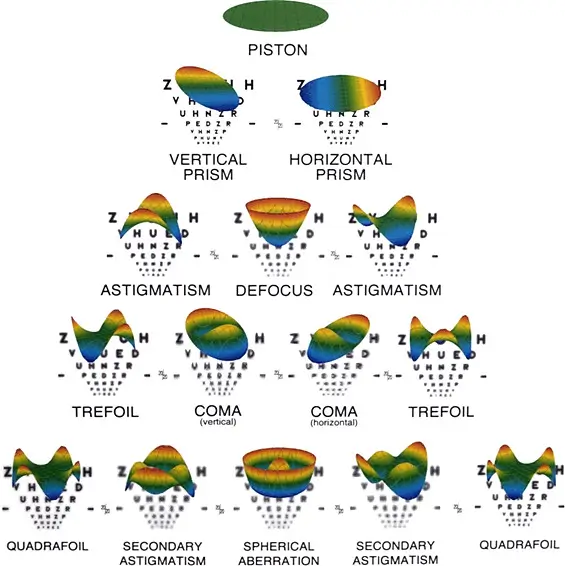
Biểu đồ này cho thấy các hình dạng quang sai phổ biến hơn được tạo ra khi mặt trận sóng ánh sáng đi qua mắt có thị lực không hoàn hảo. Một con mắt hoàn hảo về mặt lý thuyết (phía trên) được biểu diễn bằng một mặt phẳng không có quang sai, được gọi là piston để tham khảo.
Quang sai bậc cao có tác động như thế nào đến chất lượng thị lực?
Tác động của quang sai bậc cao đến chất lượng thị lực phụ thuộc vào nhiều yếu tố, bao gồm nguyên nhân cơ bản gây ra quang sai.
Những người có đồng tử lớn hơn thường có thể gặp nhiều vấn đề hơn về triệu chứng thị lực do quang sai bậc cao gây ra, đặc biệt là trong điều kiện ánh sáng yếu khi đồng tử mở to hơn.
Nhưng ngay cả những người có đồng tử nhỏ hoặc vừa cũng có thể gặp vấn đề đáng kể về thị lực khi quang sai bậc cao là do các tình trạng như sẹo trên bề mặt mắt (giác mạc) hoặc đục thủy tinh thể làm mờ thấu kính tự nhiên của mắt. Ngoài ra, một số nghiên cứu đã phát hiện ra các loại và hướng cụ thể của quang sai bậc cao ảnh hưởng đến chất lượng thị lực của mắt có đồng tử nhỏ hơn.
Lượng lớn một số quang sai bậc cao nhất định có thể gây ra tác động nghiêm trọng, thậm chí là tàn tật, đến chất lượng thị lực.
Những triệu chứng nào liên quan đến hiện tượng quang sai bậc cao?
Một mắt thường có một số quang sai bậc cao khác nhau tương tác với nhau. Do đó, không dễ để rút ra mối tương quan giữa một quang sai bậc cao cụ thể và một triệu chứng cụ thể. Tuy nhiên, quang sai bậc cao thường liên quan đến nhìn đôi, mờ, bóng ma, quầng sáng, đốm sáng, mất độ tương phản và nhìn kém vào ban đêm .
Có thể hiệu chỉnh được quang sai bậc cao không?
Ngày nay, khá nhiều sự chú ý đang tập trung vào hiện tượng quang sai bậc cao vì cuối cùng chúng đã có thể được chẩn đoán bằng công nghệ mặt sóng (quang sai) và vì gần đây chúng được xác định là tác dụng phụ nghiêm trọng của phẫu thuật khúc xạ.
Hiện nay, nhiều dạng quang học thích ứng đã hoặc đang được phát triển để tùy chỉnh hiệu chỉnh quang sai bậc cao. Bao gồm các loại kính mới, kính áp tròng , thấu kính nội nhãn và phẫu thuật khúc xạ, giúp thay đổi hình dạng bề mặt mắt hoặc giác mạc.
Mục đích của quang học thích ứng là đạt được loại hiệu chỉnh thị lực có thể làm phẳng hình dạng của mặt sóng xuất hiện trên mặt phẳng của đồng tử bằng cách bù đắp sự biến dạng của nó.
Tuy nhiên, quang học thích ứng có thể không xác định được những khiếm khuyết vật lý cụ thể của các thành phần khúc xạ trong mắt gây ra những biến dạng này ngay từ đầu.
Để lại bình luận
Lưu ý: Bình luận của bạn sẽ được kiểm duyệt trước khi hiển thị. Vui lòng giữ nội dung lịch sự và phù hợp.